





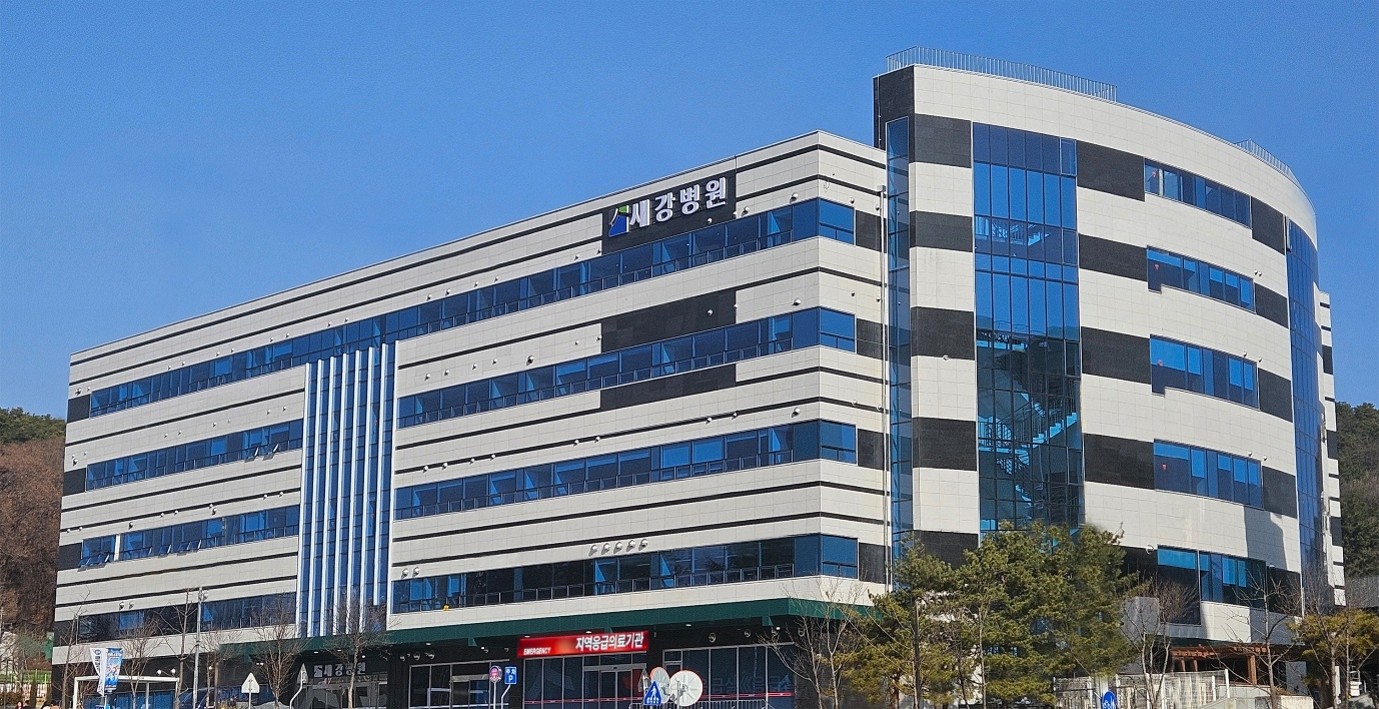
Saegang Hospital, located in Pyeonghwa-dong, Jeonju, Jeollabuk-do, has built a real-time patient monitoring system on a digital infrastructure designed for smart hospital operations, strengthening both patient safety and ward operational efficiency.
Saegang Hospital operates nine clinical departments — orthopedics, neurosurgery, emergency medicine, internal medicine, surgery, plastic surgery, rehabilitation medicine, radiology, and anesthesiology and pain medicine — with 200 beds and 13 medical staff providing care. Starting September 1, the hospital will newly open a neurology department. It has also been working to build a digital-based clinical environment to enhance patient safety and efficient ward operations.
In line with this direction, Saegang Hospital adopted a real-time patient monitoring environment built on a smart hospital platform from the hospital's opening stage. The system was built by People&Technology, a smart hospital solutions specialist, and was designed around a platform-centered approach that considered overall ward operations, rather than simply introducing individual devices.
People&Technology's smart hospital platform is characterized by its ability to integrate patients' biometric signal data generated on the ward together with bed and room information into a single system. Saegang Hospital adopted the wearable ECG device HiCardi and the wearable oxygen saturation device Nonin, and the biometric signals collected through each device are integrated and managed at the ward level via the smart hospital platform.
HiCardi and Nonin devices have been applied to key wards, including the 3rd, 4th, and 5th floor wards and the intensive care unit. This enables real-time monitoring of patients' key vital signs — including ECG, respiration rate, skin temperature, and oxygen saturation — providing a foundation for more quickly identifying changes in patient condition and responding to abnormal signs, not only in the ICU but also in general wards.
In addition, an electronic nameplate system has been installed across all wards, including the ICU, functioning as a bed information display that allows bed- and room-level information to be checked intuitively. The structure linking biometric signal data collected from wearable devices on the ward to the smart hospital platform was designed so that patient information can be stably integrated and managed at the ward level.
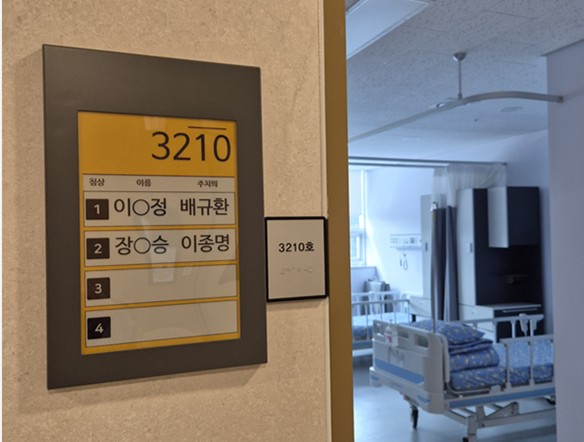
Electronic nameplates installed in the wards at Saegang Hospital.
Through this approach, Saegang Hospital has organically connected patient biometric signal data with ward operational information around People&Technology's smart hospital platform, establishing a systematic and stable ward operating environment from the earliest stage of opening. This case — a platform-based smart hospital deployment rather than the introduction of a single device — carries significant implications for future advancement in hospital operations and digital expansion.
Ha-heon Song, President of Saegang Hospital, said, "Through the real-time patient monitoring system, we have built a clinical environment that allows us to identify and respond to changes in patient condition more quickly. We will continue to advance our smart medical infrastructure to enhance patient safety and the quality of medical services, and to establish ourselves as a trusted medical institution in the local community."

